


How to Use a Wood-Burning Stove to Heat a House
How to Heat a House With a Wood-Burning Stove
A wood-burning stove can provide effective home heating when the stove is properly sized, operated correctly, and installed in a location that allows heat to circulate.
Whether one stove can heat an entire house depends on factors such as the home's floor plan, insulation, ceiling height, outdoor temperature, stove location, and the heating capacity of the appliance. For broader planning guidance before installing a fireplace, stove, or outdoor appliance, see our fireplace and outdoor appliance installation guide.
Quick Answer
The key is not simply producing more heat. You also need to burn wood efficiently and move warm air away from the stove room into the rest of the home.
In this guide, we'll explain how to operate a wood-burning stove for effective heating, how to distribute heat between rooms, and when fans, blowers, or more advanced heat-distribution systems make sense.
Important: Wood-burning stoves differ in their controls, loading procedures, clearances, and operating requirements. Always follow the installation and operating instructions supplied by the manufacturer of your specific stove.

Whole-home performance depends on matching the stove to the home and then moving heat effectively beyond the immediate stove area.
Can a Wood-Burning Stove Heat an Entire House?
A wood-burning stove can heat a large portion of a home and, in some layouts, may provide most or all of the required heat. However, whole-house heating is easier in open floor plans where warm air can move freely and more difficult in homes with multiple stories, closed rooms, long hallways, or poor insulation.
The stove must also have enough heating capacity for the space. An undersized stove will struggle to maintain comfortable temperatures, while an oversized stove may encourage inefficient low-burning operation if occupants continually reduce the fire to avoid overheating the stove room. If you're comparing wood-burning appliances for both heating and cooking, our Nectre N350 vs. N550 wood-burning cook stove comparison explains the differences between these two options.
If you're comparing dedicated home-heating appliances, you can also explore HearthStone Green Mountain wood-burning stoves when evaluating available stove options.
Before relying on a wood stove as a primary heating source, consider:
How to Start a Wood-Burning Stove for Home Heating
A strong, clean-burning fire begins with dry fuel, sufficient combustion air, and proper startup technique. The exact procedure varies by stove, so use the following as general guidance and follow your stove manufacturer's instructions for control settings and loading procedures.
Before lighting a new fire, remove excess ash if needed while maintaining the firebox according to the stove manufacturer's instructions. Different appliances have different recommendations for ash depth and firebox preparation.
Start with dry kindling and properly seasoned firewood. Wet or inadequately seasoned wood is harder to ignite, produces less useful heat, and can result in poorer combustion.
Set the stove's air controls to the startup position specified by the manufacturer. Adequate combustion air helps the fire establish quickly and allows the stove and chimney system to warm properly.
Place approved fire starters or newspaper with dry kindling in the firebox and ignite the fire. Do not assume that leaving the stove door open or partially open is appropriate for every appliance. Only operate the door in this manner if the manufacturer's instructions specifically permit it during startup.
Once the kindling is burning strongly, add larger pieces of seasoned wood without overloading the firebox. Loading orientation and maximum fuel quantity vary by stove, so follow the manufacturer's recommendations.
After the fire is established, close the loading door and adjust the air controls according to the stove's operating instructions. Some appliances also use dampers or other combustion controls, but these components and their correct positions differ among stove models.
How to Get More Heat From a Wood-Burning Stove
Getting more useful heat does not mean operating the stove as aggressively as possible. Efficient heating comes from maintaining proper combustion, using suitable firewood, and operating the appliance within the manufacturer's recommended range.
For Higher Heat Output
- Use dry, seasoned firewood.
- Allow the fire to become fully established before making major air-control adjustments.
- Maintain the air settings required for a strong, clean-burning fire.
- Keep the loading door fully closed during normal operation unless the manufacturer's instructions state otherwise.
- Do not overfill the firebox or exceed the stove manufacturer's maximum firing recommendations.
Avoid overfiring. Running a stove beyond its intended operating range can damage components and create unsafe operating conditions. More fuel and more combustion air should never be treated as an unlimited way to increase heating output.
For Lower Heat Output and Longer Burns
Reducing the combustion air can slow the burn rate, but excessively restricting the fire can lead to poor combustion. A long burn is not automatically an efficient burn.
- Allow the fire to become well established before reducing the air supply.
- Adjust the air controls gradually rather than immediately restricting the fire.
- Keep the stove within the operating range recommended by the manufacturer.
- Avoid repeatedly operating the stove with a weak, smoldering fire simply to extend burn time.
How to Distribute Wood-Stove Heat Throughout a House
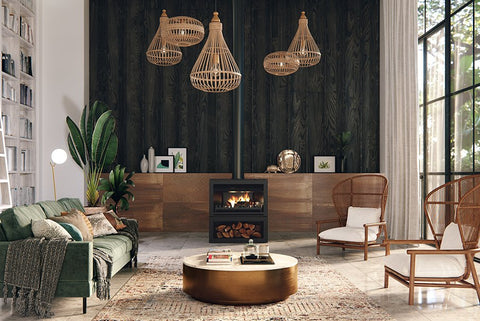
A wood stove heats the space around it first. If warm air cannot move away from the stove room, that room can become uncomfortable while bedrooms, hallways, or other living areas remain cool.
The best heat-distribution method depends on the home's layout and the appliance. In many homes, improving normal air circulation can make a noticeable difference without modifying the heating system.
| Method | Best For | Main Benefit | Main Limitation |
|---|---|---|---|
| Stove or room fan | Open or partially open layouts | Simple way to improve air movement | Limited effectiveness through closed rooms or complex layouts |
| Compatible blower | Stoves designed for blower-assisted convection | Moves heated air away from the stove more quickly | Must be suitable for the appliance and installation |
| Purpose-designed heat distribution | Larger or more complex homes | Can distribute heat beyond the stove room | Requires compatible equipment and proper system design |
1. Use a Fan to Improve Air Circulation
A properly positioned fan can help move heated air away from the stove area and establish circulation between warmer and cooler parts of the home.
Stove-top fans are designed to help circulate warm air around the room, while ordinary room fans can help create airflow between rooms. Their effectiveness depends heavily on the layout of the house.
Do not place an ordinary fan directly on a hot stove unless it is specifically designed for stove-top use. Follow the fan manufacturer's temperature and placement requirements.
2. Use a Compatible Stove Blower
A blower can increase convection by moving heated air away from the stove and into the surrounding room. For appliances designed to accept one, a compatible blower can provide stronger and more controlled airflow than passive heat movement alone.
Do not assume that any plug-in blower is suitable for any wood stove. Use equipment that is compatible with the stove and installation.
3. Consider Purpose-Designed Heat Distribution for Larger Homes
Homes with multiple levels or separated rooms can be more difficult to heat evenly with a single freestanding stove. A purpose-designed heat-distribution system may help in some installations, but a standard wood-burning stove should not simply be connected to existing central HVAC ductwork unless the appliance and system are specifically designed and approved for that arrangement.
If whole-home heat distribution requires changes to ductwork, venting, chimney configuration, or the stove installation, the system should be evaluated by a qualified professional familiar with the appliance and applicable installation requirements.
How to Move Wood-Stove Heat Into Other Rooms
If the stove is operating correctly but nearby rooms remain cold, the issue may be heat circulation rather than heat production.
Keep Interior Pathways Open
Open interior doors can make it easier for warm and cool air to circulate between spaces. Closed bedrooms and isolated rooms are naturally harder to heat from a stove located elsewhere in the house.
Use Fans to Establish Airflow
Room fans can help create a circulation path between the stove room and cooler areas. The goal is to establish steady air exchange rather than simply blowing hot air in a random direction.
Plan Stove Location Carefully
A centrally located stove generally has a better opportunity to distribute heat through a home than one positioned at the far end of an isolated room. Stove location should be considered during installation planning along with required clearances, hearth protection, chimney configuration, and the manufacturer's installation requirements. For a broader look at how different fireplace installations affect placement and room design, see our guide to fireplace mounting options.
An already-installed wood stove should not simply be moved to improve airflow. Relocation can affect venting, chimney connections, clearances, hearth requirements, and other installation conditions.

Common Wood-Stove Heating Mistakes
If the stove does not have sufficient heating capacity for the home, improving airflow alone will not solve the problem. Stove sizing must match the intended heating load.
Adding excessive fuel does not automatically produce efficient heating and can result in operation outside the manufacturer's intended range.
Extremely restricted combustion can produce a weak, smoky fire rather than efficient heat. Operate the stove within the manufacturer's recommended range instead of treating the longest possible burn time as the primary goal.
A stove heats its immediate area first. Closed doors and compartmentalized layouts restrict natural air circulation, so distant rooms may remain cooler even when the stove room is very warm.
Accessories should be appropriate for the stove and their intended operating environment. Do not place standard household equipment where it can be damaged by excessive stove temperatures.
Do not connect a wood-burning stove to existing central heating ductwork simply as a DIY heat-distribution solution. Any ducted system must be compatible with the appliance and designed for that application.
Wood-Burning Stove Safety Considerations
Effective home heating depends on safe operation as much as heat output. Always follow the stove manufacturer's instructions for installation, clearances, venting, fuel loading, combustion controls, maintenance, and accessories.
- Use the fuel type specified for your appliance.
- Operate the stove with the loading door in the position required by the manufacturer.
- Do not exceed recommended fuel-loading or firing limits.
- Do not modify stove controls, venting, or heat-distribution components without confirming that the configuration is permitted.
- Keep required clearances around the stove and venting system.
- Have installation or system changes evaluated by an appropriately qualified professional when required.
Can a wood-burning stove heat an entire house?
Yes, a properly sized wood-burning stove can heat much or all of some homes, especially with an open floor plan and good insulation. Multi-story, compartmentalized, poorly insulated, or oversized homes are harder to heat evenly from one stove.
How do you circulate heat from a wood stove around a house?
Use open interior pathways and properly positioned fans or a compatible stove blower to establish airflow between warm and cool spaces. Fans cannot compensate for an undersized stove or a layout that severely restricts air movement.
How do you move wood-stove heat into other rooms?
Keep interior doors open where appropriate and use controlled air circulation to exchange cooler air with warmer air near the stove. Closed or distant rooms may still require supplemental heating if airflow is limited.
Should you use a fan with a wood-burning stove?
A stove-top fan, compatible blower, or properly positioned room fan can improve heat circulation. Do not place ordinary household fans directly on a hot stove unless they are specifically designed for that use.
Can a wood stove be connected to existing ductwork?
Do not connect a standard wood-burning stove directly to existing central HVAC ductwork unless the appliance and system are specifically designed and approved for that configuration. Ducted heat distribution requires compatible equipment and proper system design.
Why isn't my wood stove heating the whole house?
The stove may be undersized, poorly located, or unable to circulate heat through the home's layout. Poor insulation, closed rooms, multiple stories, and inadequate airflow can also prevent even heating.
Summary: How to Heat a House With a Wood-Burning Stove
A wood-burning stove can be an effective home-heating solution, but successful whole-home heating depends on more than simply building a large fire.
The stove must be appropriately sized, operated within its intended range, supplied with suitable dry firewood, and positioned where heat can move through the home.
For many homes, opening interior pathways and improving airflow with a properly selected fan or compatible blower can help distribute heat beyond the stove room. Larger or more complex homes may require a more specialized heat-distribution strategy.
Most importantly, do not treat stove controls, door positions, dampers, blowers, or duct connections as universal. Wood-burning appliances differ significantly, so the manufacturer's installation and operating instructions should always determine how your specific stove is used.
Shop Wood-Burning Stoves and Related Products

If you're considering a wood-burning appliance for your home, explore Flame Authority's available wood-burning stoves, wood-fired ovens, and related products:
Learn also How to Use a Wood-Burning Cook Stove. If you're exploring outdoor wood-fired cooking, see our HPC Forno de Pizza Oven cooking guide. You can also try these 3 Easy Wood-Fired Oven Recipes.
For shoppers comparing specific stove lines, explore the Napoleon S25 wood stove collection. If you already have a suitable fireplace and are considering a different type of wood-burning heating appliance, you can also explore wood-burning fireplace inserts. For additional heating and cooking options from Nectre, browse the Nectre collection.
Looking for wine cellar cooling units, wine racks, wine coolers, and beverage centers? Get big discounts, affordable prices, and free shipping from our sister company Wine Coolers Empire!
Need Help Choosing a Wood-Burning Stove?
If you have any questions, please contact us and we'll be more than happy to assist you! You may also call our amazing customer support at 1-800-923-4556 or email us at support@flameauthority.com.