


Vented vs. Ventless Gas Logs: Which Is Better for Your Fireplace?
Vented vs. Ventless Gas Logs: Differences, Heat, Flame Appearance & How to Choose
Vented and vent-free gas logs can both create the appearance of a traditional fireplace fire, but they are designed for different priorities and different fireplace conditions.
Vented gas logs generally prioritize realistic flame appearance, while vent-free gas logs are designed to direct more heat into the room where their use is approved.
Quick Answer: Vented or Ventless Gas Logs?
Choose vented gas logs when realistic flames and traditional fireplace ambiance are your priorities and your fireplace has an appropriate functioning venting system.
Consider vent-free gas logs when stronger supplemental room heating is the priority and your fireplace, room, installation conditions, manufacturer requirements, and local regulations permit vent-free operation.
In either case, verify fireplace dimensions, fuel type, burner compatibility, ignition requirements, and installation instructions before ordering.

This guide compares vented vs. ventless gas logs so you can understand their differences, advantages, limitations, and compatibility before choosing a gas log set for your home.
The right option depends on your fireplace, heating goals, available fuel, venting configuration, installation requirements, and applicable regulations.
If you are comparing gas logs with a complete fireplace rather than upgrading an existing firebox, start with the gas fireplace buying guide to understand the broader installation choices.
If you are still determining the appropriate size, fuel, burner, and log configuration, review our guide to choosing the right gas log set for your fireplace.
Vented vs. Ventless Gas Logs at a Glance
| Factor | Vented Gas Logs | Vent-Free Gas Logs |
|---|---|---|
| Venting | Requires an appropriate chimney or flue to remain open during operation | Designed to operate without sending combustion gases through a chimney |
| Primary Benefit | More realistic flame appearance | More room-directed supplemental heat |
| Flame Appearance | Generally taller and more natural-looking | Typically more controlled |
| Heat Retention | Some heat escapes through the chimney | More heat remains inside the room |
| Typical Use | Ambiance and traditional fireplace appearance | Supplemental room heating where approved |
| Installation Consideration | Requires a suitable vented fireplace and working venting path | Requires an approved application and compliance with manufacturer and local requirements |
| Best For | Buyers prioritizing appearance | Buyers prioritizing room-directed heat |
What Is a Gas Log Set?
A gas log set is a gas-burning fireplace system that uses decorative logs to create the appearance of a traditional wood fire.
The logs are typically arranged over a gas burner and are designed for use with natural gas or propane, depending on the specific system.
Because the burner affects flame presentation, fuel delivery, ignition, and compatibility, buyers who need more detail can review the complete guide to fireplace burner systems.
If the burner itself is the main buying decision, the fireplace burner buying guide provides a more focused comparison.
Gas log systems are generally divided into two categories: vented gas logs and vent-free or ventless gas logs.

What Are Vented Gas Logs?
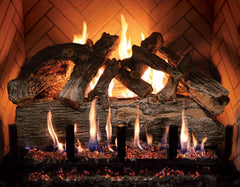
Vented gas logs are designed for fireplaces with an appropriate chimney or flue that allows combustion byproducts to be directed outside.
Their main advantage is appearance. Vented systems are generally designed to produce taller, more natural-looking flames that move around the decorative logs in a way that resembles a traditional wood-burning fire.
Because the fireplace must remain vented during operation, some of the heat produced by the burner also leaves through the chimney.
For a manufacturer-specific option focused on traditional vented presentation, you can compare Peterson Real Fyre vented gas log sets after confirming burner size, fuel type, fireplace dimensions, and installation requirements.
Advantages of Vented Gas Logs
- More realistic flame presentation.
- Traditional fireplace ambiance.
- Combustion products are directed through the fireplace venting system.
- Strong choice when appearance is the primary goal.
Limitations of Vented Gas Logs
- A suitable chimney or flue is required.
- More heat escapes through the venting system.
- Better for ambiance than maximum heat in many applications.
What Are Vent-Free or Ventless Gas Logs?
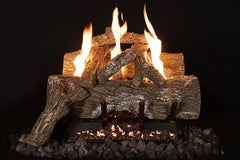
Vent-free gas logs, also called ventless or unvented gas logs, are designed to operate without using a chimney to exhaust combustion gases outside.
Because heated air is not intentionally sent up a chimney during operation, vent-free gas logs can direct more of their heat into the room.
This makes them attractive to buyers looking for supplemental heating in addition to fireplace ambiance.
If you are comparing gas logs with a complete vent-free fireplace, the broader vent-free gas fireplace collection provides another product path for approved installations.
Advantages of Vent-Free Gas Logs
- More generated heat remains in the room.
- No operating chimney vent is required.
- Can provide stronger supplemental heating potential.
Limitations of Vent-Free Gas Logs
- Not approved for every application.
- Indoor air and moisture must be considered.
- Flame appearance is generally less natural than vented logs.
- Local restrictions can apply.
Which Gas Logs Produce More Room-Directed Heat?
A vented system requires the fireplace flue to remain open, allowing some of the heat to escape with the exhaust.
Vent-free systems are designed to retain more heat inside the living space.
Vented Gas Logs
Better suited to projects where flame appearance and fireplace ambiance are more important than maximizing heat retained in the room.
Vent-Free Gas Logs
Better suited to approved applications where supplemental room heating is a higher priority.
Which Gas Logs Look More Realistic?

Vented gas logs generally provide the more realistic flame presentation.
Their burners can create taller flames that move around and between the decorative logs, producing an appearance closer to a traditional wood-burning fireplace.
Vent-free systems are designed around different combustion requirements, so their flame patterns are generally more controlled.
If realistic flame movement and detailed log presentation are your highest priorities, compare available vented gas log sets, including Peterson Real Fyre vented gas logs.
Gas Log Compatibility and Installation Requirements
Compatibility should be resolved before selecting log style, flame appearance, or decorative details.
- Venting: Vented gas logs require an appropriate venting path, while vent-free gas logs must be approved for vent-free operation.
- Fuel type: Confirm whether your installation uses natural gas or liquid propane and choose a compatible system. For a deeper look at propane-specific fireplace considerations, see the propane fireplace buying guide.
- Fireplace dimensions: Measure the fireplace carefully so the burner and log set fit according to manufacturer requirements.
- Burner compatibility: Confirm that the burner, logs, fuel, ignition system, and firebox dimensions are compatible. For additional selection guidance, review the fireplace burner buying guide.
- Installation requirements: Follow the instructions supplied with the specific burner and log set.
- Local regulations: Verify applicable requirements before purchasing or installing a vented or vent-free gas log system.
Vented vs. Vent-Free Gas Logs: Pros and Cons
| Type | Advantages | Limitations |
|---|---|---|
| Vented Gas Logs | Realistic flame appearance Traditional fireplace ambiance Combustion products directed through venting |
Requires suitable venting More heat escapes through chimney Better suited to ambiance than maximum heating |
| Vent-Free Gas Logs | More heat remains in the room No operating chimney vent required Stronger supplemental heating potential |
Not permitted or suitable everywhere Indoor combustion and moisture considerations Typically less natural-looking flame pattern |
Which Gas Log Type Should You Choose?
Choose Vented Gas Logs When
- You want the most realistic flame appearance.
- Fireplace ambiance is more important than maximizing room-directed heat.
- Your fireplace has an appropriate functioning chimney or venting system.
- You want combustion products directed outside through the fireplace venting system.
Consider Vent-Free Gas Logs When
- Supplemental room heating is a higher priority.
- Your fireplace or installation is specifically suitable for vent-free operation.
- Local regulations permit the system.
- You have confirmed the manufacturer's room, installation, and operating requirements.

Appearance or Heat: Decide What Matters Most
If the fireplace is mainly intended as a decorative focal point, realistic flame appearance may matter more than maximizing room-directed heat.
In that case, begin with the vented gas log collection.
If supplemental heating is a primary goal, an approved vent-free gas log set may be more appropriate.
Compatibility still comes first in either case.
When a Complete Gas Fireplace May Be the Better Choice
A gas log set is primarily relevant when you already have a compatible fireplace or firebox that can accept the appropriate burner and log system.
If you are planning a new fireplace installation rather than converting an existing firebox, review the gas fireplace buying guide and browse the gas fireplace collection to compare complete systems.
For projects where sealed combustion and dedicated venting are priorities, the direct vent gas fireplace buying guide explains that alternative in more detail.
Buyers ready to compare complete models can also review the best direct vent gas fireplaces and browse direct vent gas fireplaces.
Shop Gas Log Sets by Type
Shop Vented Gas Log Sets
Best suited to buyers prioritizing realistic flame appearance and traditional fireplace ambiance.
Shop Vented Gas Log SetsShop Vent-Free Gas Log Sets
Designed for approved applications where greater room-directed supplemental heat is a priority.
Shop Vent-Free Gas Log SetsCompare All Gas Log Sets
Browse the full gas log category after confirming fireplace compatibility and fuel requirements.
Browse All Gas Log SetsCompare Gas Log Sets and Brands
Use the gas log set collection to compare available sizes, fuel configurations, burner systems, log styles, controls, and installation requirements.
Buyers comparing manufacturer-specific options can explore Monessen gas logs and log sets.
If your installation requires a vented system and realistic traditional presentation is a priority, compare Peterson Real Fyre vented gas log sets.
Brand should come after compatibility. Confirm venting, fuel type, fireplace dimensions, burner requirements, ignition, and manufacturer installation requirements before narrowing the choice by log design or manufacturer.
Related Gas Log and Fireplace Buying Guides
Choosing a Gas Log Set
Compare fireplace measurements, fuel type, venting, and system compatibility in our gas log set selection guide.
Fireplace Burner Systems
Understand burner types, fuel compatibility, sizing, and system components with the complete fireplace burner system guide.
Fireplace Burner Selection
If the burner itself is your next buying decision, use the fireplace burner buying guide.
Propane Fireplace Options
If your installation uses propane, review the propane fireplace buying guide before choosing a fuel-specific system.
Complete Gas Fireplaces
If you are considering a complete fireplace rather than a gas log conversion, read the gas fireplace buying guide.
Direct Vent Gas Fireplaces
If your project requires a complete sealed direct-vent system instead of gas logs, use the direct vent gas fireplace buying guide.
Best Direct Vent Gas Fireplaces
Once direct vent is the right configuration for your project, compare the best direct vent gas fireplaces.
Best Fireplaces for Your Home
If you are still deciding whether gas logs or another fireplace type better fits your space, compare the best fireplace options for your home.
B-Vent Gas Fireplaces
Read the B-Vent Gas Fireplaces guide if you are comparing alternative complete gas fireplace venting configurations.
Ventless Gas Fireplaces
If you want a complete vent-free fireplace rather than a gas log set, compare ventless gas fireplaces.
Best Gas Fireplaces
For a broader comparison of complete systems, compare the best gas fireplaces.
Frequently Asked Questions About Vented and Ventless Gas Logs
What is the main difference between vented and ventless gas logs?
Vented gas logs require an appropriate chimney or flue and generally prioritize realistic flame appearance. Vent-free gas logs retain more heat in the room but should only be used where the fireplace, manufacturer instructions, and local requirements permit vent-free operation.
Which gas logs look more realistic?
Vented gas logs generally provide the more natural-looking flame presentation. Choose them only when the fireplace has the required venting and the specific burner and log set are compatible.
Which gas logs provide more room heat?
Vent-free gas logs generally retain more generated heat inside the room. Do not choose them solely for heating performance unless vent-free operation is approved for the fireplace and installation.
Do vented gas logs require a working chimney?
Yes. Vented gas logs require an appropriate chimney or flue and suitable venting path for the specific installation.
Can vent-free gas logs be installed anywhere?
No. Only use vent-free gas logs where the fireplace, room, manufacturer requirements, and applicable local regulations permit vent-free operation.
Can I use natural gas logs with propane?
Do not assume natural gas and propane systems are interchangeable. Choose a burner and gas log configuration specifically designed or approved for the fuel supplied to the fireplace.
How do I know what size gas log set I need?
Compare the fireplace dimensions with the manufacturer's burner and log-set requirements. Do not choose a gas log set based only on the width of the front fireplace opening.
Do I need to check the burner when choosing gas logs?
Yes. The burner affects fuel compatibility, ignition, flame presentation, log placement, and fit, so confirm the burner and logs are approved to work together before ordering.
Are vent-free gas logs better than vented gas logs?
No type is universally better. Choose vented logs for realistic flame presentation when proper venting is available, or consider vent-free logs for greater room-directed heat only where vent-free operation is permitted.
Vented vs. Ventless Gas Logs: Final Recommendation
Choose vented gas logs when realistic flames and traditional fireplace ambiance are your primary goals and your fireplace has the required venting.
Consider vent-free gas logs when greater room-directed supplemental heat is the priority and your fireplace, installation conditions, manufacturer requirements, and local regulations permit vent-free operation.
In either case, confirm the fireplace dimensions, fuel configuration, burner compatibility, ignition system, venting requirements, and installation instructions before purchasing.
Shop Gas Log SetsRecommended decision sequence: Fireplace Type → Venting → Natural Gas or Propane → Fireplace Measurements → Burner Compatibility → Heat vs. Ambiance → Ignition & Controls → Manufacturer Requirements → Local Requirements.